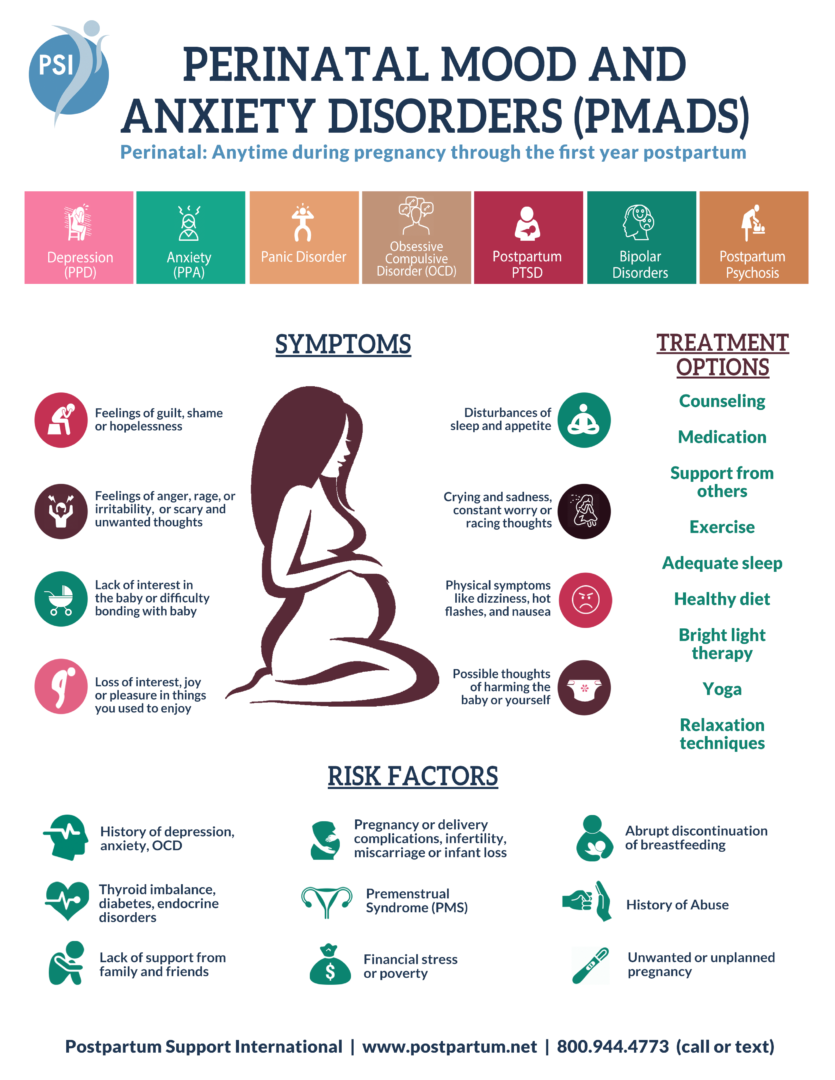
4 Perinatal Mood Disorders to Look Out For:
First, it’s helpful to remember that perinatal mental health issues aren’t exclusive to moms. Partners, siblings, and even grandparents can all be affected by the arrival of a new baby. A newborn introduces a mammoth shift in the social and emotional functioning of a family system. Although the birth parent is the only one going through a physical and hormonal hail storm, it’s a good idea to routinely check in with everyone.
1). Prenatal Depression or Anxiety
Most of the hype is focused on postpartum depression— meaning after the baby is born. But, pregnant folks get depressed and anxious too. This can be hard to remember when the zeitgeist is telling you to “glow” or to be constantly in awe of your little miracle. However, 1 in 7 pregnant people experience significant anxiety or depression.
Depression can present as fatigue, loss of interest in doing things, irritability, social isolation, or an unrelenting sad mood. Prenatal depression often rears its ugly head during the first trimester— when you’re likely feeling sick and exhausted. Really, pregnancy is an alien takeover of your once autonomous body. So, any kind of emotional fallout or grief process is normal— especially when the baby is too small to fully bond with. And if you’re still waiting to share your pregnancy news, keep in mind you don’t have access to your typical support system. That alone can make pregnant folks feel sad and isolated.
Some anxiety in pregnancy is completely normal— you’re preparing for a huge life adjustment. But check-in with yourself to make sure your healthy worry is not crossing the line into an anxiety disorder. Symptoms to look out for are: insomnia, panic attacks, low appetite, and repetitive/intrusive fears. If you’ve suffered previous miscarriages or perinatal loss, these symptoms can be exacerbated. Make sure you have an outlet in which you can express your thoughts and fears.
In a rapidly changing body, symptoms can be tricky to detect. So, be sure to check in with your P.I.E.S— ask yourself, “how am I feeling Physically, Intellectually, Emotionally, and Spiritually?”
2). Postpartum Depression
If you constantly feel like you’re failing, or if you’re having thoughts like, “my baby would be better off without me”, that is postpartum depression. Depression can have many forms, which is why it can be tricky to recognize. Many new parents experience their PPD through irritability, social withdrawal, or an increase in substance use.
PPD can be sparked by a variety of factors— physical changes, psychosocial pressures, or the very real logistical stressors that come with having a newborn. If you were sensitive to hormonal changes pre-pregnancy, chances are you could be vulnerable to intense mood fluctuations in the first few weeks postpartum. Additionally, if you have some perfectionism in your blood, or you find it difficult to ask for help— those personality traits are also predictors of PPD.
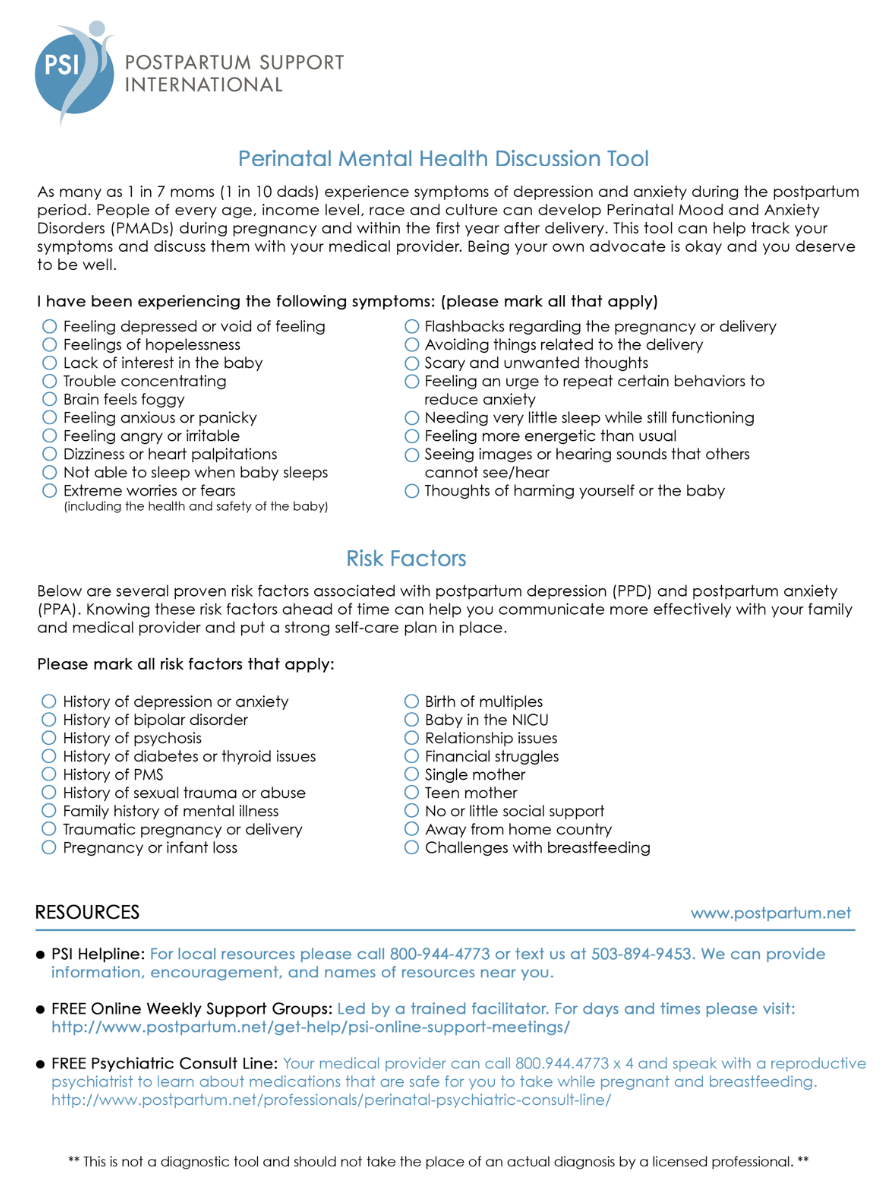
Unfortunately, the thick stigma around PPD keeps new parents from asking for help. Just remember that depression after childbirth is very common— 80% of new moms experience sadness in the first few weeks after a baby. Additionally, 1 in 7 moms experience severe PPD or anxiety. And don’t forget their partners— 1 in 10 dads or partners experience PPD as well.
3). Perinatal OCD
Parents experience Perinatal OCD as obsessive thoughts about things that could harm the baby. Like, “What if I drop my baby down the stairs?” or, “What if I drown my baby in the bath?” These intrusive images can be very distressing to parents. Lots of guilt and shame tend to arise in parents with perinatal OCD. Folks wonder if these thoughts mean that they themselves are a danger to their baby. Usually, the opposite is true. In fact, this type of anxiety comes from a deeply protective part of your brain. But in this case, it just has kicked into overdrive.
Unchecked hypervigilance can spark unhealthy changes in behavior, like not leaving the house, driving a car, or leaving the baby with a partner— anything that could limit the potential of danger. If you’re feeling completely hijacked by anxious thoughts, it’s possible you could be experiencing Perinatal OCD.
4). Postpartum PTSD
PTSD is an anxiety disorder that arises after experiencing a terrifying event in which “grave physical harm occurred, was threatened, or was perceived.” Almost 10% of women experience PTSD after childbirth. Common birth traumas are: unplanned C-sections, a baby going to the NICU, a prolapsed cord, or a severe medical complication.
If you experienced a frightening event while giving birth, it could still be affecting you in the form of nightmares, flashbacks, or emotional flooding. Often, folks suffering from PTSD will avoid certain places or stimuli that remind them of the traumatic event. So, if you can’t bear to drive down the same street as the hospital, that might be a clue. Similarly to postpartum anxiety, PTSD can also result in hypervigilance and anxious behaviors.
Support & Resources:
The most important thing to know is these perinatal mood disorders are temporary and treatable. Support groups are available to you through Postpartum Support International or your local hospital. Weekly therapy can also be a good resource for new parents who need a safe place to process all the recent changes. This online directory can help you find a local provider.
Quisque iaculis facilisis lacinia. Mauris euismod pellentesque tellus sit amet mollis.